
Lumpkin County Criminal Court Records
A Lumpkin County criminal court record is the court case file, not the arrest report. Superior Court handles felony matters and broad criminal jurisdiction in the Enotah Judicial Circuit. Magistrate Court may handle warrant applications, first-appearance or bond-related records, county ordinance matters, and certain misdemeanors. Dahlonega Municipal Court handles city general misdemeanor, traffic, and ordinance cases. The Clerk of Superior Court is the custodian for Superior, Juvenile, and Magistrate Court records.
Criminal court records can include charging documents, docket entries, motions, orders, hearing notices, bond orders, pleas, dispositions, sentences, probation terms, fines, costs, restitution, and appeal entries. For the arrest report, booking side, or current custody status, use the Sheriff's Office or the jail lookup path. For the charge list and case outcome, use the court file. The separate arrest records and court charges page focuses on the arrest-to-charge pathway.
The District Attorney's Office page identifies Jeff Langley as District Attorney for the Lumpkin office and shows the court-campus contact block used for criminal prosecution work.
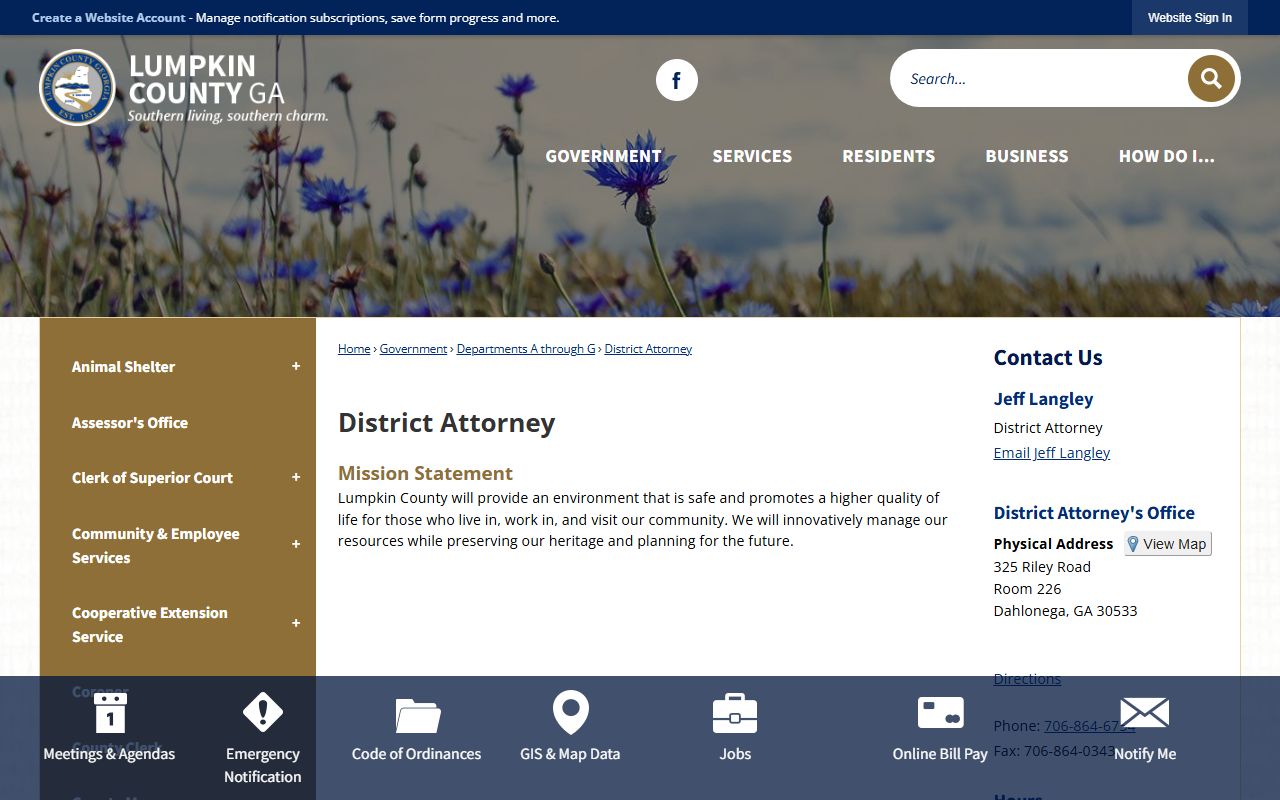
That prosecutor office context matters because charges, plea negotiations, and many record-restriction workflows involve the prosecuting attorney, while the Clerk keeps the filed court record.
Search Lumpkin County Criminal Cases
For online Superior Court case access, start with the Georgia Courts e-access directory and follow the Lumpkin Superior listing to PeachCourt. The PeachCourt public page describes civil and criminal e-filing and court documents, but the public capture showed login and registration controls rather than open search fields. Account access should be expected before full searching or document viewing.
- Confirm whether the matter is Superior, Magistrate, Juvenile, or Dahlonega Municipal before searching.
- Use Georgia Courts e-access for the Superior Court provider path, then continue to PeachCourt.
- Search inside the provider account by the fields available there, such as defendant name or case number if offered.
- Read the docket for charges, hearings, motions, plea, disposition, and sentence entries.
- Request certified copies from the Clerk of Superior Court when an official court copy is needed.
For defense-side resources, the Enotah Circuit Public Defender page names Penny Hunter and describes indigent criminal defense under Georgia law.
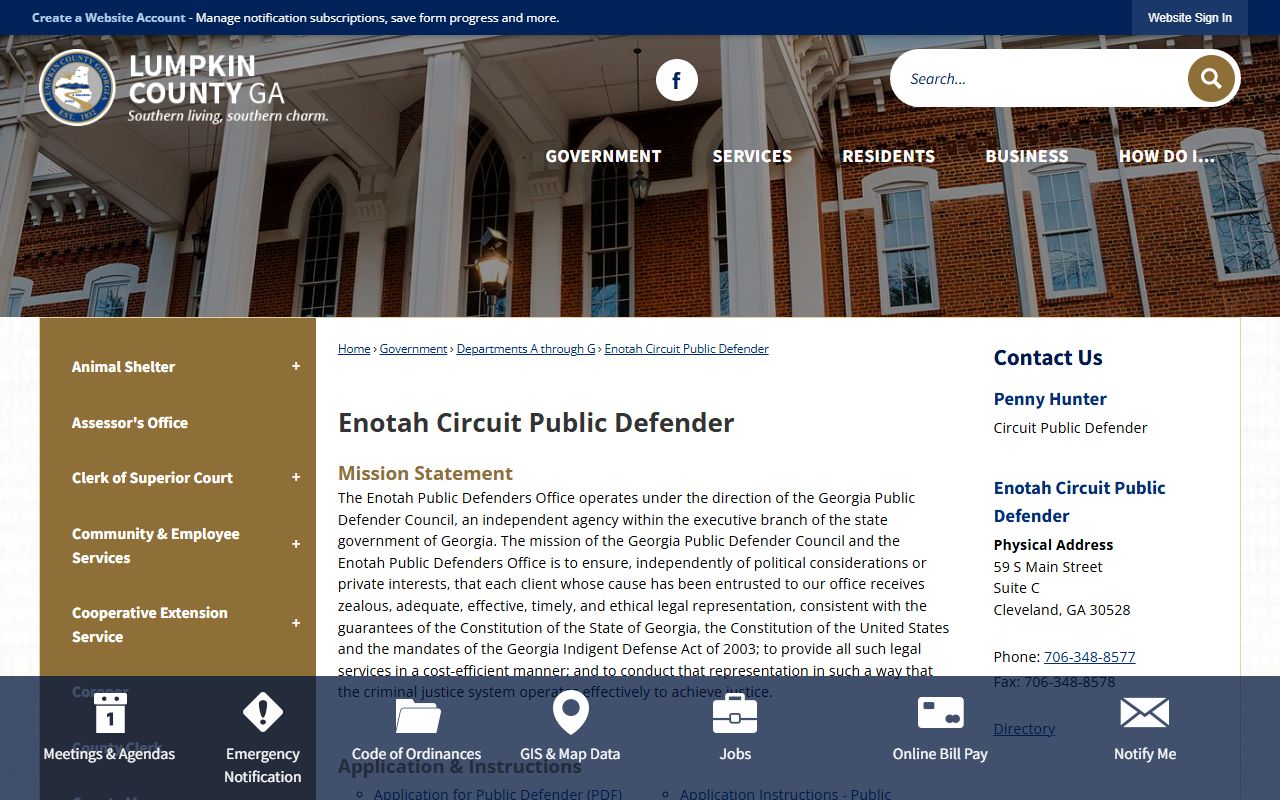
Public defender records are not a substitute for court files, but the office may appear in criminal case events when eligible defendants receive appointed counsel.
Lumpkin County Criminal Case Stages
Criminal case records change as the case moves. The first court file may not tell the final story. A charge can be amended, reduced, dismissed, or resolved through plea or trial. The docket should be read in order so the reader can see whether a charge is still pending, whether a bond order was entered, whether a plea was accepted, and what sentence or probation terms followed.
Case flow: Charges Filed › Arraignment › Pretrial and Motions › Plea or Trial › Disposition › Sentencing
| Stage | What Happens |
|---|---|
| Charges filed | A prosecutor, accusation, indictment, or other charging document starts the court-charge record. |
| Arraignment | The defendant formally addresses the charge, and a plea may be entered. |
| Pretrial and motions | The docket may show bond orders, discovery, motions, hearings, continuances, and rulings. |
| Plea or trial | The case is resolved by plea, trial verdict, dismissal, or another disposition. |
| Sentencing | The record may show jail or prison time, probation, fines, costs, restitution, and conditions. |
What Lumpkin Criminal Records Show
Lumpkin County criminal court records can contain more than a name and charge. A complete file may show the court, case number, defendant, prosecutor, defense counsel, charge text, statute, bond, warrant number, arraignment, motion history, plea, disposition, sentence, probation, confinement, fines, costs, restitution, and appeal entries. A single arrest can lead to several court charges, and each charge can have a different status.
| Field | What It Shows |
|---|---|
| Case number | The court's tracking number, with exact format confirmed by PeachCourt or the Clerk. |
| Defendant | The person charged in the criminal case. |
| Charges | The alleged offenses filed in court, including statute or offense labels when available. |
| Bond or warrant | Release conditions, warrant events, or bond amounts if entered in the court file. |
| Plea | The defendant's formal response, such as guilty, not guilty, or nolo contendere. |
| Disposition | The final charge result, such as guilty, dismissed, acquitted, or nolle prosequi. |
| Sentence | Confinement, probation, fines, costs, restitution, and court-ordered conditions. |
Charges vs Convictions
A charge is an accusation in court. A conviction is a final result after a guilty plea, no-contest plea with legal effect, or guilty verdict. Lumpkin County criminal court records may show charges that were reduced, dismissed, or never resulted in conviction. Read the disposition and sentence fields before treating a charge as a final criminal outcome.
| Charge | Conviction | |
|---|---|---|
| Stage | Filed accusation or indictment | Final plea or verdict result |
| Meaning | Alleged offense | Legally resolved offense |
| Record clue | Charge list or docket event | Disposition, judgment, sentence, or probation entry |
| Risk | Can be amended or dismissed | May carry sentence, fines, points, or restrictions |
Sealed and Restricted Records
Georgia commonly uses the term record restriction for limiting public access to eligible criminal-history information. The official statute source for O.C.G.A. 35-3-37 explains the state framework for restriction and sealing. Eligible records may be hidden from public view, but courts, law enforcement, or authorized agencies may still have access under Georgia law.
Use that law when reading a case that appears missing from public results after a restriction order or prosecutor-approved record restriction process.
| Sealed or Restricted | Expunged | |
|---|---|---|
| Georgia wording | Record restriction is the key public-access term | Older or informal wording may appear, but confirm the legal effect |
| Public access | Limited or hidden from public searches | Do not assume destruction unless a controlling order or statute says so |
| Who may still see it | Courts, law enforcement, and authorized users may retain access | Depends on the order and statute |
Criminal Court Record Access
Georgia's public-record access framework starts with O.C.G.A. 50-18-70 and O.C.G.A. 50-18-71. Court records are public unless sealed, restricted, confidential by law, or redacted. Agencies may charge lawful search, retrieval, redaction, production, and copy fees. The county open-records material repeats the three-business-day response concept, but criminal court copies still need to be requested from the right custodian.
O.C.G.A. 17-4-20 covers arrests with and without warrants.
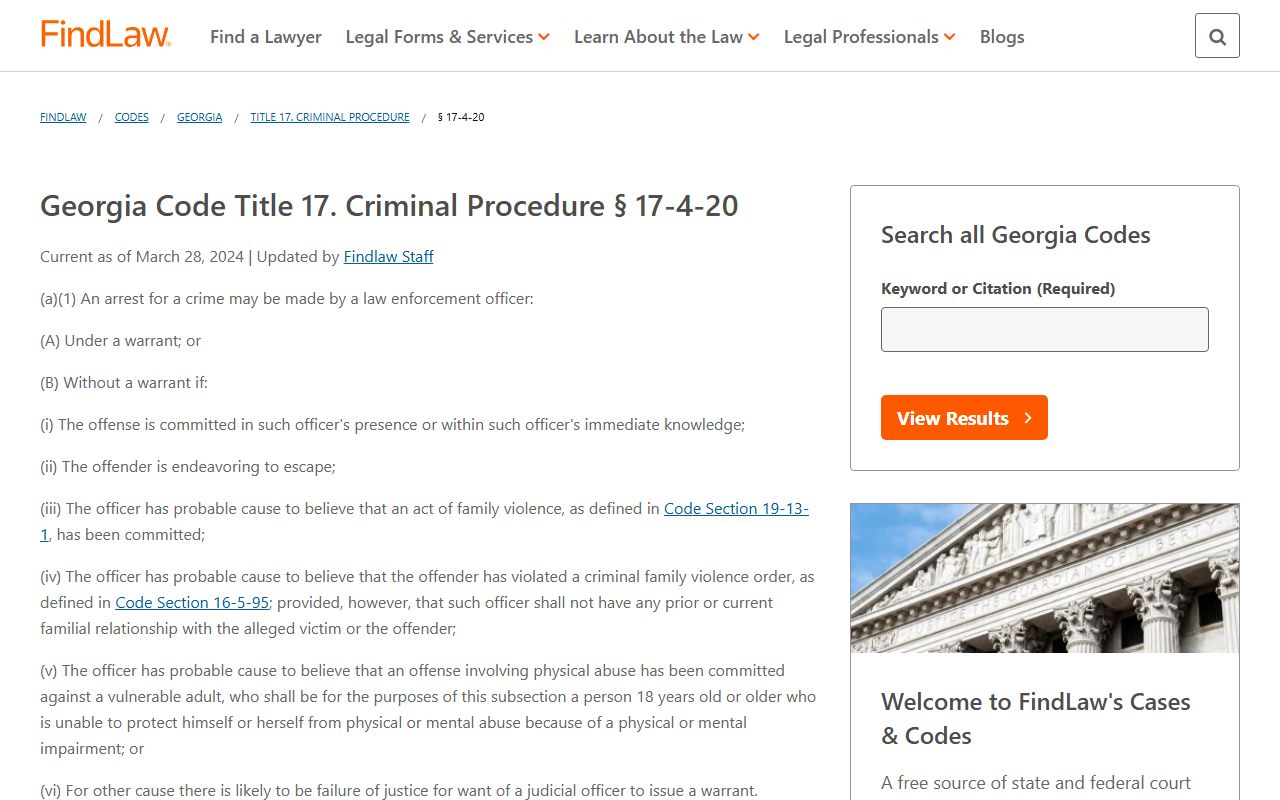
That arrest authority is related to criminal cases, but arrest authority alone does not replace the court docket and disposition.
O.C.G.A. 17-4-40 addresses who may issue arrest warrants.
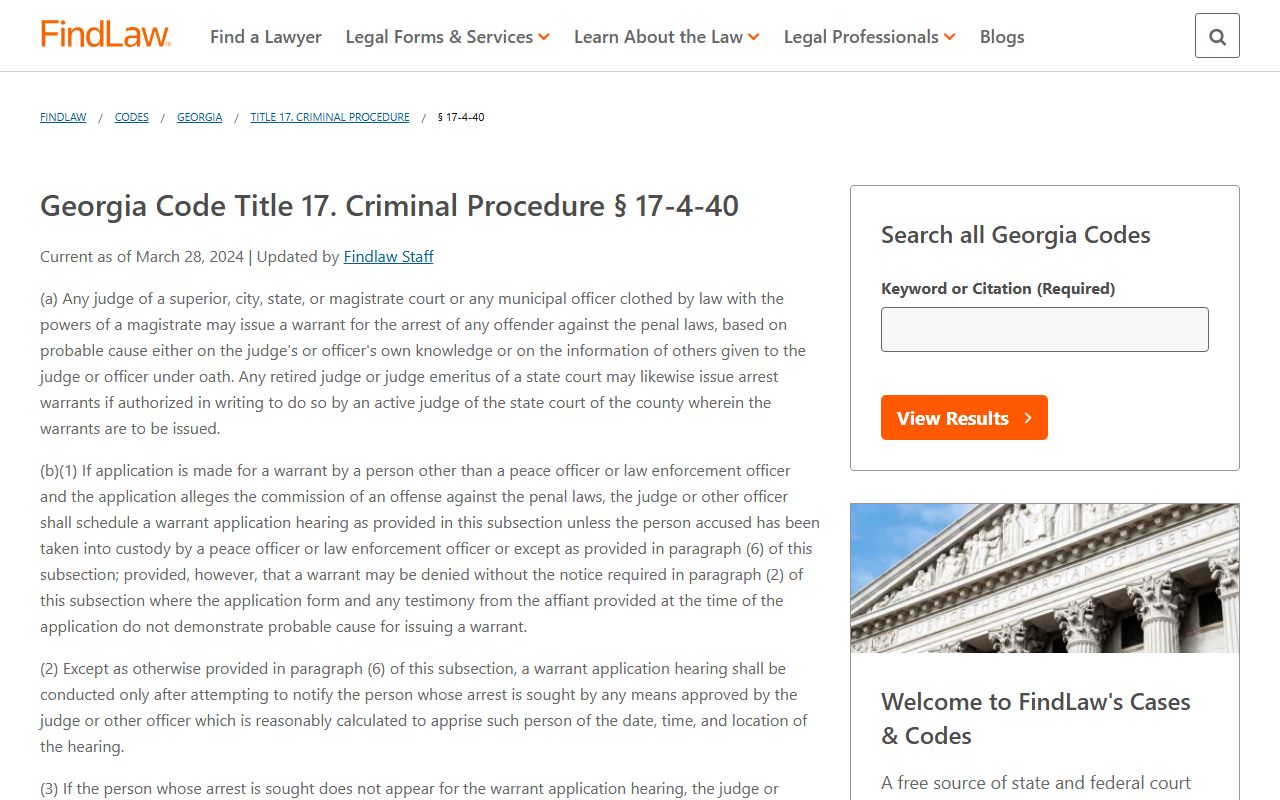
Warrant authority can appear in a criminal record, but active warrant checks should also use the Sheriff, Magistrate Court, and court-clerk channels when safety or appearance risk is involved.
Restricted Lumpkin County Criminal Records
Juvenile criminal-related records are not ordinary public case files. Adoption records, sealed matters, restricted criminal-history entries, and files with protected personal identifiers may not be visible in public search results. Active law-enforcement investigation records can also be withheld or redacted. If a case is missing, the reason may be court type, age of record, provider account limits, restriction, sealing, or custody by a non-court office.
Sheriff-side criminal history has a separate local process. The Sheriff's FAQ says criminal histories are requested at the Sheriff's Office with identification, proof of residence, work, or school when applicable, exact cash payment, and next-business-day processing rules. That Sheriff criminal-history process is not the same as a certified criminal court case copy from the Clerk.
Important: Criminal court records should not be used for FCRA-regulated screening without a lawful consumer-reporting process.